
 |
|---|
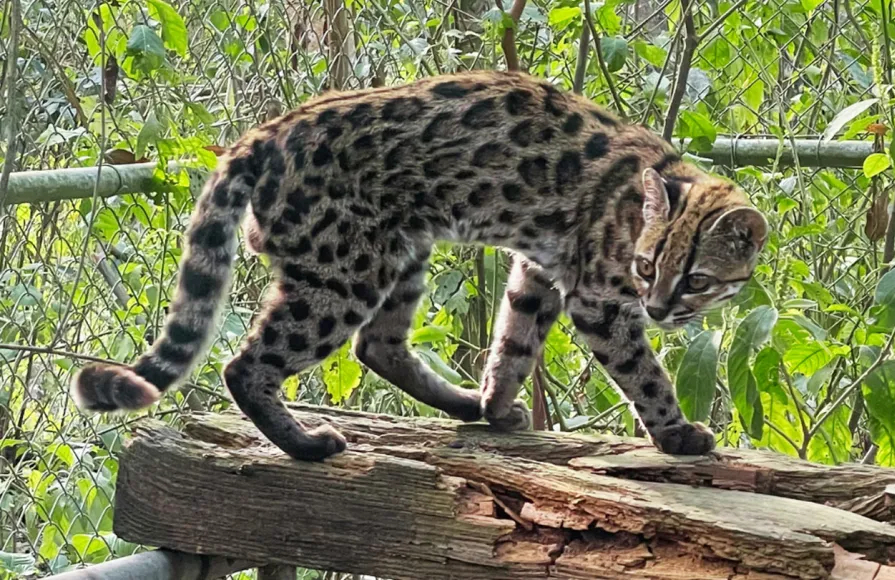
| Scientists don’t yet know how many of these cats are in the wild, but Leopardus tilcayo is the first new living cat species described in more than 100 years. Paola Nogales-Ascarrunz |

|
Meet the Newest Living Cat Species
Science News
September 27, 2026
Attention cat lovers: There’s an adorable new addition to the feline family tree.
Meet Leopardus tilcayo, a pint-size tiger cat discovered in Bolivia in the Yungas forests of the central Andes Mountains. L. tilcayo, reported September 17 in Current Biology, is the first new living cat species described and named by scientists in more than 100 years. The last one was the Uruguayan pampas cat (L. fasciatus), described in 1923.
L. tilcayo has a slender body, spotted fur and a ringed tail. It weighs roughly two kilograms, about as much as a two-month-old domestic kitten. For such a tiny cat, L. tilcayo has made a terrific splash, pouncing into headlines around the world. “I did not at all expect attention at this scale,” says Jonas Lescroart, an evolutionary biologist at the University of Antwerp in Belgium.
Lescroart and his colleagues hadn’t set out to discover a new species. They were looking to untangle one branch of the cat family tree. Until now, scientists didn’t have a good sense of how many tiger cat species existed. These small cats live in the tropical regions of the Americas and tend to look alike, Lescroart says.
The researchers analyzed the genetics of 38 species of the Leopardus genus, which includes tiger cats as well as more widely known animals like the ocelot. They expected to find two, three or even four distinct species of tiger cat. Instead, Lescroart and his colleagues’ analyses pointed to five separate species, including one that scientists had never before described: L. tilcayo.
The new species is based on two specimens: a female that was treated briefly for injuries at a sanctuary in Bolivia and released to the wild and a male that still lives at the sanctuary. His name is Tigrino. Lescroart’s colleague, Paola Nogales-Ascarrunz, met Tigrino at the sanctuary and noticed that he looked a little different from the cats she expected to see in the region. Nogales-Ascarrunz, a cat conservationist and National Geographic Explorer, genetically tested Tigrino and then connected with Lescroart’s team to share data.
The researchers’ work suggests that there’s diversity hiding even among well-studied animals like cats. “I don’t know if you’ll have to wait another 100 years for a new species,” Lescroart says. Though at the moment, the team doesn’t have any other cryptic kitties on the radar.